
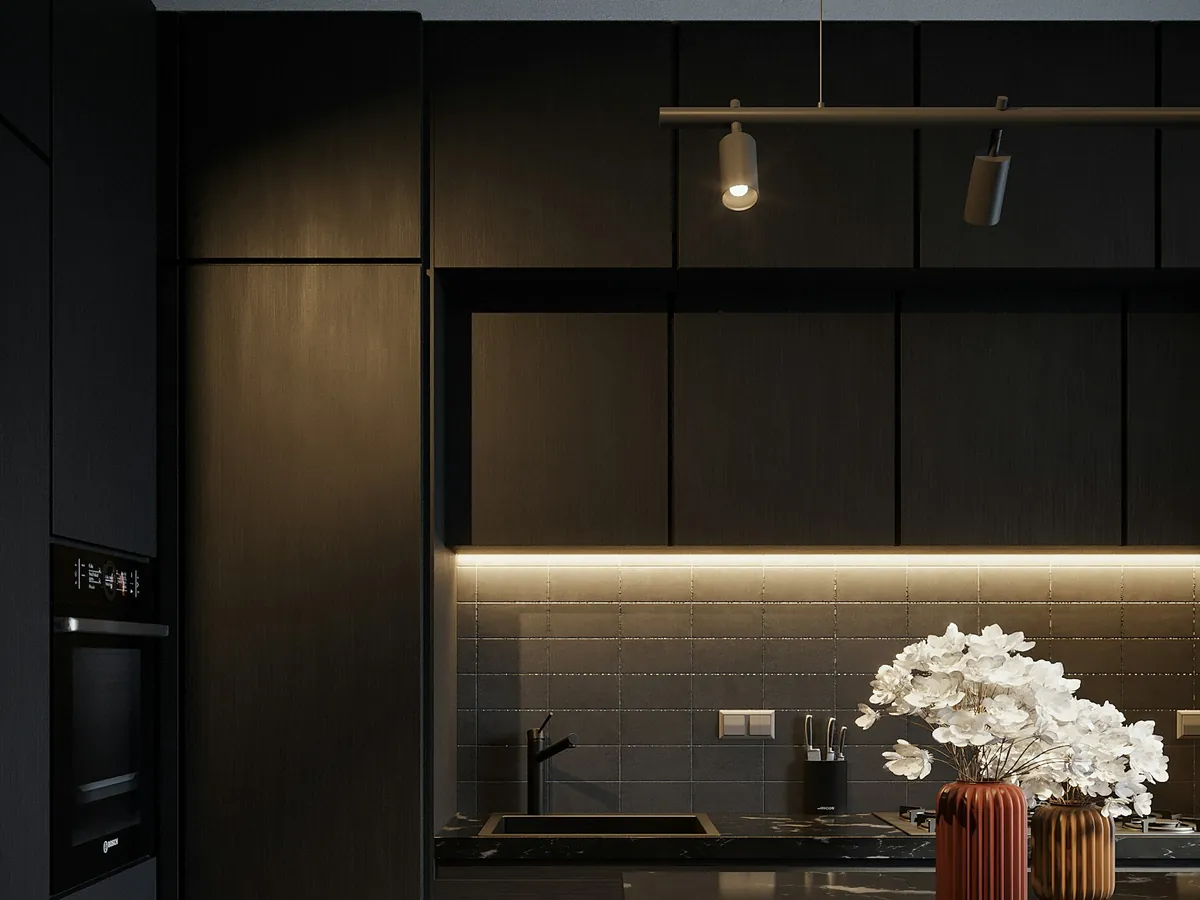
Lighting installation in Irvine
Lighting installation in Irvine for new pendants, wall lights, under-cabinet strips and full lighting plans. We plan the layout and switching with you, then fit, test and certify every light, with a free quote.
- 5 years in business
- No call-out charge
- Free, no-obligation quotes
- 24/7 emergency call-outs
Lighting installation for Irvine homes
- 01
Layers of light
Most rooms work best with more than one type of light: general light from the ceiling, task light where you cook or read, and softer accent light from lamps, wall lights or LED strips. Planning these layers together gives a room that works by day and feels relaxed at night.
- 02
Switching that makes sense
Good switching matters as much as the fittings. Two-way switches at the top and bottom of stairs, dimmers in living rooms and separate switches for each lighting layer let you change the feel of a room without walking round turning lamps on and off.
- 03
Choosing the colour of light
LED lights come in different colour temperatures. Warm white, around 2700K to 3000K, feels cosy in living rooms and bedrooms, while cooler white suits kitchens, utility rooms and garages. Keeping the same colour within a room stops it looking patchy.
What to expect from a lighting installation
We walk through the rooms with you, talk about how you use them and mark where each light and switch will go. We check the existing lighting circuits and consumer unit, then give you a free quote that lists the fittings, cabling and any making good needed.
On the day, we run any new cables, fit the lights and switches, and connect them to the right circuit. Every light is tested, dimmers are checked with the chosen bulbs, and you receive a certificate for the new work.
What's included
- Layout planned room by room
- Advice on fittings and colour
- Two-way and dimmer switching
- Circuits checked for capacity
- Every light tested
- Certificate for the work
How it works
Call or send a message
Tell us what the problem is or what you'd like done. We aim to respond the same day.
We visit and quote
We look at the job and give you a free quote, with no obligation and no call-out charge.
Done, tested and certified
We carry out the work, test everything we've worked on and leave you the right certificate for the job.
Lighting installation questions
Can you add wall lights to an existing room in Irvine?
Yes. Wall lights usually take power from the existing lighting circuit, with cables run in the wall to each position. Some channelling into the plaster is normally needed, so it's best done before decorating. We'll show you the cable route before we start.
Why do my new LED lights in Irvine flicker when dimmed?
Usually because the dimmer switch was made for old filament bulbs. LEDs need a dimmer rated for LED loads, and the bulbs themselves must be dimmable. Swapping the dimmer for an LED-compatible one normally solves it, and we test the pairing before we leave.
How much does a lighting installation cost in Irvine?
It depends on how many lights you're adding, whether new cables are needed and the type of fittings. Swapping fittings on existing points costs far less than wiring new positions. You'll get a free quote after we've walked through the rooms with you.
Can you move a ceiling light to a better spot in Irvine?
Yes. A ceiling light can usually be moved by extending the cable through the ceiling void to the new position. In upstairs rooms this is often done from the loft, keeping damage to a minimum. Downstairs, it may mean lifting a floorboard above or a small cut in the ceiling.
Lighting installation across North Ayrshire
Choose your area to see our lighting installation work near you.
Book lighting installation in Irvine
Tell us which rooms you'd like to relight, and we'll come and plan the layout with you.